This page is dedicated to proposals & mockups that are waiting to find the right space & funding to complete them.
If you are interested in hearing more about these projects please email amyb.ritter@gmail.com
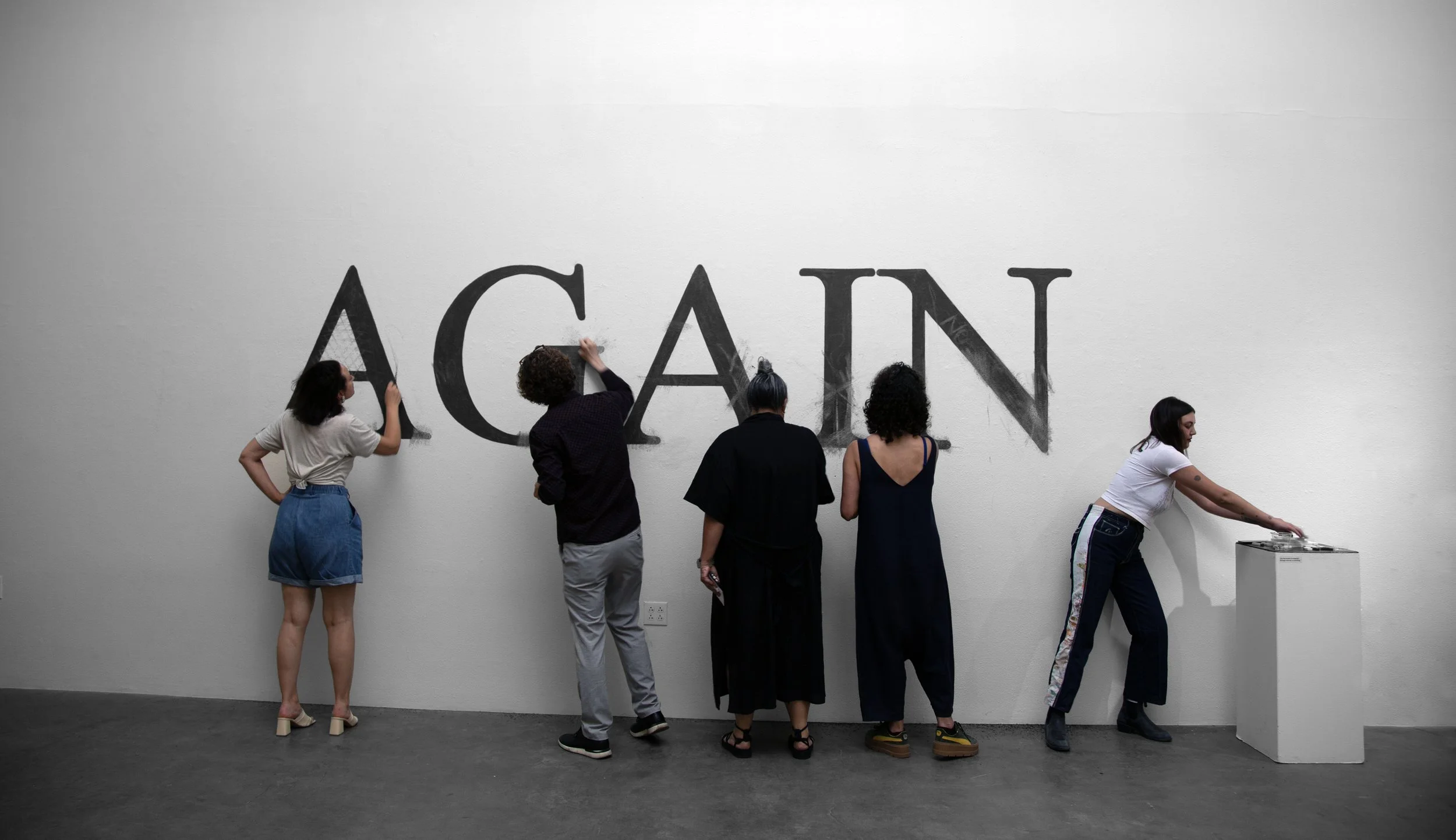
AGAIN is a participatory work that I first installed at the Santa Fe Art Institute in 2025 as mockup to test interaction and how the work would change over time. Please see below for more information. I’m looking for a space to recreate this work. I imagine it to be an interior space with heavy foot traffic. Please see the description below.
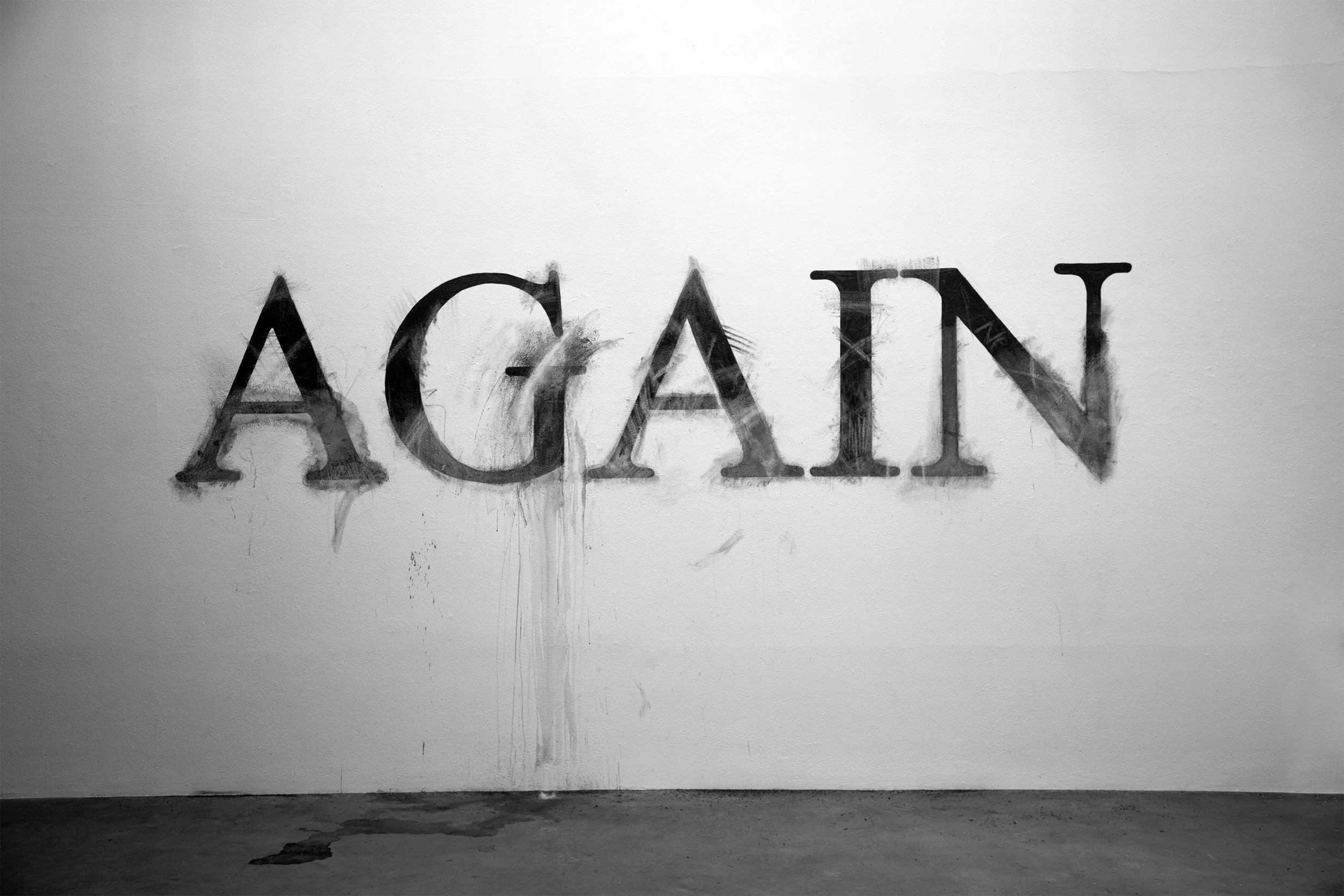
AGAIN, 2025, Graphite, Erasers
Use the erasers to respond—through gesture, removal, or rewriting
The word “AGAIN” is deeply charged within the American cultural psyche. Popularized during Donald Trump’s 2016 presidential campaign, it evoked a powerful sense of nostalgia for some—a promise to return to a perceived former greatness—while for others, it symbolized exclusion, fear, and regression. It became more than a slogan; it became a dividing line.
This work invites viewers to physically engage with the word “AGAIN” through the act of erasure. Drawn in graphite directly onto the gallery wall, each letter holds weight—not just in scale, but in symbolism. As visitors use erasers to alter or remove the word, they participate in a collective and personal reckoning with the narratives it upholds. But erasure is never complete. The smudges and residue that remain are a quiet testament to the persistence of memory, history, and meaning.
Presented in the context of Donald Trump’s second term in office, this piece is both timely and reflective. It asks: Can we ever truly erase the past? And if not, how do we live with its imprint? AGAIN becomes a catalyst for dialogue around power, language, identity, and the echoes of American mythology.
——————————————————————————————————————————————————————————————————————————————————————————
ASPHALT, 2025
The Asphalt Sections originate from the deliberate fracturing of a larger slab of asphalt, a gesture that mirrors the splintering conditions of our contemporary world. These broken forms speak to the ongoing degradation we collectively face—from escalating political volatility and widening class divides to our persistent failure to address global warming.
Asphalt also carries a personal resonance. Growing up in a mobile home park, the streets around me were marked by potholes, cracked surfaces, and the ephemeral traces of children’s chalk drawings. These fragments, both literal and symbolic, anchor the work in memory while pointing toward the fragile infrastructures—social, political, and environmental—that shape our lives today.

Description: A piece of asphalt broken in half with children’s chalk drawings
Interaction: Can be used to lounge, sit, or play on
Material: Sculpted foam, resin, metal mesh, concrete, gravel, chalk & sealant
Approximate size: 48 IN x 36 IN x 28 IN
——————————————————————————————————————————————————————————————————————————————————————————
Search for the American Dream is a site-specific public installation that transforms a single-wide mobile home into an immersive, interactive environment. By reimagining the gallery as lived space, the work invites viewers to step inside a structure emblematic of America’s affordable housing landscape. Within this altered space, audio, video and performance converge to explore the complexities of class, aspiration, and belonging in relation to the American Dream Ideology. Search for the American Dream is deeply personal and rooted in my own history of growing up in a double-wide trailer in rural Pennsylvania.
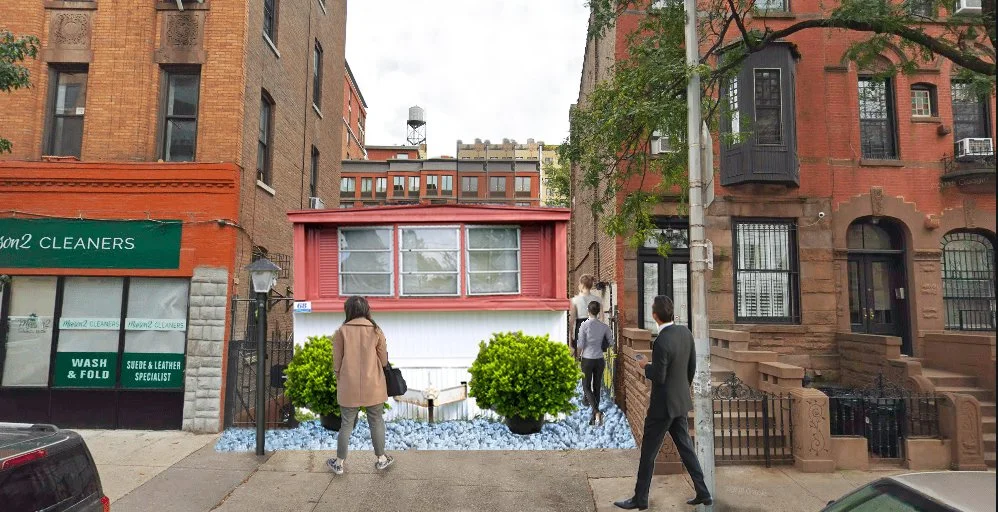
In this architectural installation, I’m utilizing non-traditional methods of interaction to amplify voices and environments often rendered invisible in dominant narratives. The culminating sculpture is a single wide mobile home transported to a public site within an urban, rural, or institutional landscape that includes all the furnishings of a home. This allows people from diverse backgrounds to experience the installation together creating a sense of awareness and belonging in a possibly strange and foreign place. The American Dream ideology teaches us to blame ourselves for lack of social mobility. Yet research shows working class Americans rarely leave their social class. I know firsthand that this unwarranted shame is amplified when living in a mobile home. The Search for the American Dream is not only a space to contemplate the historical phenomenon that is the mobile home, but also a place to reflect on what home is.
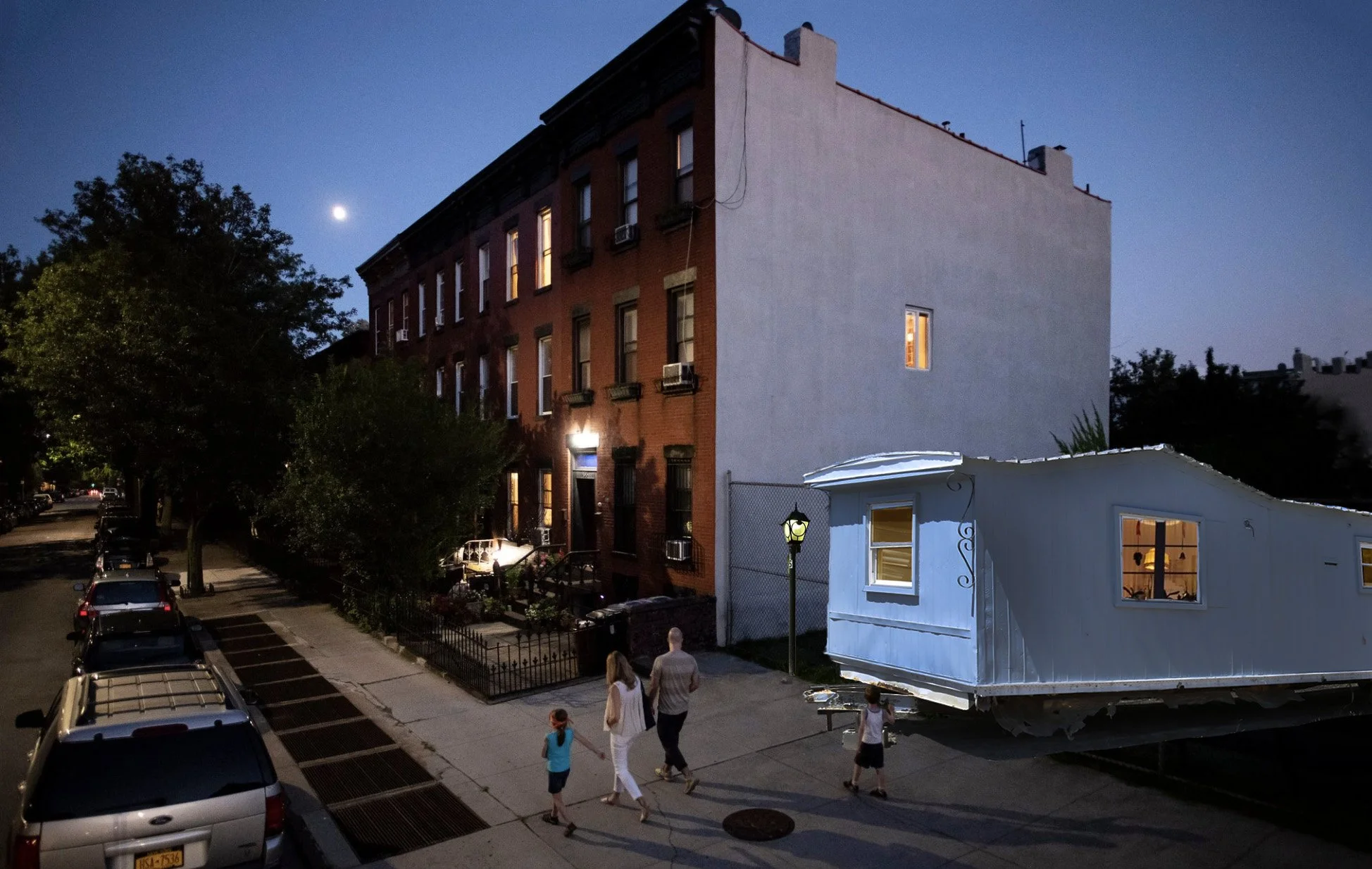
Search for the American Dream, has been supported by Vermont studio Center, Fine Arts Work Center, Skowhegan, LMCC (2016-17), Trestle Gallery (2018), Yaddo (2020), Engaging Artist Fellowship at More Art (2021), Atlantic Center for the Arts (2021), the Puffin Foundation Grant (2022) and a 2023 NYFA grant. I was also a runner up for a Creative Time grant in 2021.